Spiga
Your Ad Here
Showing posts with label CRICKET. Show all posts

ICC T20 Cricket World Cup 2012 Schedule

The dates and schedule for the upcoming T20 cricket world cup which is scheduled to take place in Sri Lanka has been finalized. All participating teams have been divided into four groups.

Group A               Group B              Group C               Group D
India                      Australia               Sri Lanka              Pakistan
England                 West Indies           South Africa          New Zealand
Afganistan              Ireland                  Zimbabwe             Bangladesh

Tue Sep 18          
14:00 GMT | 19:30 local
19:30 IST
1st Match, Group C - Sri Lanka v Zimbabwe
Mahinda Rajapaksa International Cricket Stadium, Sooriyawewa, Hambantota
N/A
Wed Sep 19          
10:00 GMT | 15:30 local
15:30 IST
2nd Match, Group B - Australia v Ireland
R Premadasa Stadium, Colombo
N/A
Wed Sep 19          
14:00 GMT | 19:30 local
19:30 IST
3rd Match, Group A - Afghanistan v India
R Premadasa Stadium, Colombo
N/A
Thu Sep 20          
14:00 GMT | 19:30 local
19:30 IST
4th Match, Group C - South Africa v Zimbabwe
Mahinda Rajapaksa International Cricket Stadium, Sooriyawewa, Hambantota
N/A
Fri Sep 21          
10:00 GMT | 15:30 local
15:30 IST
5th Match, Group D - Bangladesh v New Zealand
Pallekele International Cricket Stadium
N/A
Fri Sep 21          
14:00 GMT | 19:30 local
19:30 IST
6th Match, Group A - Afghanistan v England
R Premadasa Stadium, Colombo
N/A
Sat Sep 22          
10:00 GMT | 15:30 local
15:30 IST
7th Match, Group C - Sri Lanka v South Africa
Mahinda Rajapaksa International Cricket Stadium, Sooriyawewa, Hambantota
N/A
Sat Sep 22          
14:00 GMT | 19:30 local
19:30 IST
8th Match, Group B - Australia v West Indies
R Premadasa Stadium, Colombo
N/A
Sun Sep 23          
10:00 GMT | 15:30 local
15:30 IST
9th Match, Group D - New Zealand v Pakistan
Pallekele International Cricket Stadium
N/A
Sun Sep 23          
14:00 GMT | 19:30 local
19:30 IST
10th Match, Group A - England v India
R Premadasa Stadium, Colombo
N/A
Mon Sep 24          
14:00 GMT | 19:30 local
19:30 IST
11th Match, Group B - Ireland v West Indies
R Premadasa Stadium, Colombo
N/A
Tue Sep 25          
14:00 GMT | 19:30 local
19:30 IST
12th Match, Group D - Bangladesh v Pakistan
Pallekele International Cricket Stadium
N/A
Thu Sep 27          
10:00 GMT | 15:30 local
15:30 IST
13th Match, Super Eights, Group 1 - TBC v TBC (C1 v D2)
Pallekele International Cricket Stadium
N/A
Thu Sep 27          
14:00 GMT | 19:30 local
19:30 IST
14th Match, Super Eights, Group 1 - TBC v TBC (A1 v B2)
Pallekele International Cricket Stadium
N/A
Fri Sep 28          
10:00 GMT | 15:30 local
15:30 IST
15th Match, Super Eights, Group 2 - TBC v TBC (D1 v C2)
R Premadasa Stadium, Colombo
N/A
Fri Sep 28          
14:00 GMT | 19:30 local
19:30 IST
16th Match, Super Eights, Group 2 - TBC v TBC (B1 v A2)
R Premadasa Stadium, Colombo
N/A
Sat Sep 29          
10:00 GMT | 15:30 local
15:30 IST
17th Match, Super Eights, Group 1 - TBC v TBC (A1 v D2)
Pallekele International Cricket Stadium
N/A
Sat Sep 29          
14:00 GMT | 19:30 local
19:30 IST
18th Match, Super Eights, Group 1 - TBC v TBC (C1 v B2)
Pallekele International Cricket Stadium
N/A
Sun Sep 30          
10:00 GMT | 15:30 local
15:30 IST
19th Match, Super Eights, Group 2 - TBC v TBC (B1 v C2)
R Premadasa Stadium, Colombo
N/A
Sun Sep 30          
14:00 GMT | 19:30 local
19:30 IST
20th Match, Super Eights, Group 2 - TBC v TBC (D1 v A2)
R Premadasa Stadium, Colombo
N/A
Mon Oct 1          
10:00 GMT | 15:30 local
15:30 IST
21st Match, Super Eights, Group 1 - TBC v TBC (B2 v D2)
Pallekele International Cricket Stadium
N/A
Mon Oct 1          
14:00 GMT | 19:30 local
19:30 IST
22nd Match, Super Eights, Group 1 - TBC v TBC (A1 v C1)
Pallekele International Cricket Stadium
N/A
Tue Oct 2          
10:00 GMT | 15:30 local
15:30 IST
23rd Match, Super Eights, Group 2 - TBC v TBC (B1 v D1)
R Premadasa Stadium, Colombo
N/A
Tue Oct 2          
14:00 GMT | 19:30 local
19:30 IST
24th Match, Super Eights, Group 2 - TBC v TBC (A2 v C2)
R Premadasa Stadium, Colombo
N/A
Thu Oct 4          
13:30 GMT | 19:00 local
19:00 IST
1st Semi-Final - TBC v TBC (Super 8 Group-1 1 v Super 8 Group-2 2)
R Premadasa Stadium, Colombo
N/A
Fri Oct 5          
13:30 GMT | 19:00 local
19:00 IST
2nd Semi-Final - TBC v TBC (Super 8 Group-2 1 v Super 8 Group-1 2)
R Premadasa Stadium, Colombo
N/A
Sun Oct 7          
13:30 GMT | 19:00 local
19:00 IST
Final - TBC v TBC
R Premadasa Stadium, Colombo

Source : cricinfo.com 

IPL-3 2010 Statistics

Maximum runs : Sachin Tendulkar(MI) - 618
Jacque Kallis (RCB) - 572
Suresh Raina (CSK) - 520

Maximum wickets: Pragyan Ojha (DC) - 21
Amit Mishra (DD) - 17
Harbhajan Singh (MI) - 17

Most catches : Andrew Symonds (DC) - 12
Murli Vijay (CSK) - 11
Suresh Raina (CSK) - 10

Highest team totals : Chennai Super Kings - 246/5
Rajasthan Royals - 223/5
Mumbai Indians - 218/7

Most sixes : Robin Uthappa (RCB) - 27
Murli Vijay (CSK) - 26
Yusuf Pathan (RR) - 24

Highest individual scores : Murli Vijay (CSK) - 127
Mahela Jayawardene - 110
David Warner - 107

Most fifties : Jacque Kallis (RCB) - 6
Sachin Tendulkar(MI) - 5
Sourav Ganguly (KKR) - 4
Suresh Raina (CSK) - 4
Andrew Symonds (DC) - 4

Player of the tournament : Sachin Tendulkar (MI)

IPL 2010

Preity Zinta

Shilpa Shetty With Husband Raj Kundra

Dia Mirza

Arjun Rampal and Mehr Jessia Rampal

Mugdha Godse

Gaurav Kapur

Lalit Modi

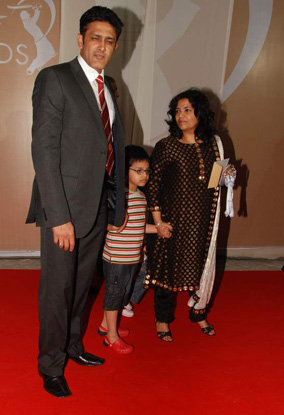
Anil Kumble with his family

Amrita Rao

Yusuf Pathan and Irfan Pathan

Vijay Mallya

Vida Samadzai

Talat Aziz with his wife Bina

Siddharth Mallya.

Shamita Shetty

Sameera Reddy

Ronit Roy

Priyanka Chopra's parents, Ashok Chopra and Madhu Chopra

Sahara IPL Awards 2010

The Jury Awards:

Best batsman: Sachin Tendulkar (Mumbai Indians);
Best bowler: Pragyan Ojha (Deccan Chargers);
Best debut performance:
Kieron Pollard (Mumbai Indians);
Best dramatic performance: Harbhajan Singh (Mumbai Indians);
Most consistent performer: Jacques Kallis (Royal Challengers Bangalore);
Best breakthrough performance 2008:
Brendon McCullum (Kolkata Knight Riders);
Best breakthrough performance 2009:
Anil Kumble (Royal Challengers Bangalore);
Best fielder: AB de Villiers (Delhi Daredevils);
Best ground:
M Chinnaswamy Stadium, Bangalore;
Best stadium experience: DY Patil Stadium, Navi Mumbai.

Viewers' Choice Awards:

Best catch: David Hussey (Kolkata Knight Riders);
Best batsman:
Sachin Tendulkar (Mumbai Indians);
Best captain:
Sachin Tendulkar (Mumbai Indians);
Best bowler: Pragyan Ojha (Deccan Chargers);
Best commentator:
Ravi Shastri;
Most stylish player: Robin Uthappa (Royal Challengers Bangalore);
Most fan-friendly cricketer:
Adam Gilchrist (Deccan Chargers);
Best fielder: Suresh Raina (Chennai Super Kings).

Statistical Awards:

Most economical bowler: Ravichandran Ashwin (Chennai Super Kings);
Fastest hundred: Yusuf Pathan (Rajasthan Royals);
Highest percentage of runs scored in boundaries:
Virender Sehwag (Delhi Daredevils)

IPL Captains' Award:
Indian cricketing legend I would want in my team: Kapil Dev.

SACHIN TENDULKAR : THE REASON TO CHEER

Sachin Tendulkar's five best innings in Test cricket :

http://sports.in.msn.com/cricket/article.aspx?cp-documentid=3211508

Best quotes on Sachin Tendulkar :

Best quotes on Sachin Tendulkar by various cricket legends like Matthew Hyden, Don Bradman, Sunil Gavaskar, Dennis Lillee, Greg Chappell, Glenn McGrath, Brian Lara and many others.

http://sports.in.msn.com/cricket/article.aspx?cp-documentid=3349169

ICC WORLD CUP 2011 FIXTURES

Sat Feb 19 1st match - India v Bangladesh
Shere Bangla National Stadium, Mirpur


Sun Feb 20 3rd match - Sri Lanka v Canada (Hambantota)
Venue TBC


Sun Feb 20 2nd match - Kenya v New Zealand
MA Chidambaram Stadium, Chepauk, Chennai


Mon Feb 21 4th match - Australia v Zimbabwe
Sardar Patel Stadium, Motera, Ahmedabad


Tue Feb 22 5th match - England v Netherlands
Vidarbha Cricket Association Ground, Nagpur


Wed Feb 23 6th match - Kenya v Pakistan (Hambantota)
Venue TBC


Thu Feb 24 7th match - South Africa v West Indies
Feroz Shah Kotla, Delhi


Fri Feb 25 9th match - Bangladesh v Ireland
Shere Bangla National Stadium, Mirpur


Fri Feb 25 8th match - Australia v New Zealand
Vidarbha Cricket Association Ground, Nagpur


Sat Feb 26 10th match - Pakistan v Sri Lanka (Colombo)
Venue TBC


Sun Feb 27 11th match - India v England
Eden Gardens, Kolkata


Mon Feb 28 12th match - Netherlands v West Indies
Feroz Shah Kotla, Delhi


Mon Feb 28 13th match - Canada v Zimbabwe
Vidarbha Cricket Association Ground, Nagpur


Tue Mar 1 14th match - Kenya v Sri Lanka (Colombo)
Venue TBC


Wed Mar 2 15th match - England v Ireland
M Chinnaswamy Stadium, Bangalore


Thu Mar 3 17th match - Canada v Pakistan (Colombo)
Venue TBC


Thu Mar 3 16th match - Netherlands v South Africa
Punjab Cricket Association Stadium, Mohali, Chandigarh


Fri Mar 4 19th match - Bangladesh v West Indies
Shere Bangla National Stadium, Mirpur


Fri Mar 4 18th match - New Zealand v Zimbabwe
Sardar Patel Stadium, Motera, Ahmedabad


Sat Mar 5 20th match - Australia v Sri Lanka (Colombo)
Venue TBC


Sun Mar 6 21st match - India v Ireland
M Chinnaswamy Stadium, Bangalore


Sun Mar 6 22nd match - England v South Africa
MA Chidambaram Stadium, Chepauk, Chennai


Mon Mar 7 23rd match - Canada v Kenya
Feroz Shah Kotla, Delhi


Tue Mar 8 24th match - New Zealand v Pakistan (Pallekele)
Venue TBC


Wed Mar 9 25th match - India v Netherlands
Feroz Shah Kotla, Delhi


Thu Mar 10 26th match - Sri Lanka v Zimbabwe (Pallekele)
Venue TBC


Fri Mar 11 28th match - Bangladesh v England
Zohur Ahmed Chowdhury Stadium, Chittagong


Fri Mar 11 27th match - Ireland v West Indies
Punjab Cricket Association Stadium, Mohali, Chandigarh


Sat Mar 12 29th match - India v South Africa
Vidarbha Cricket Association Ground, Nagpur


Sun Mar 13 30th match - Canada v New Zealand
Wankhede Stadium, Mumbai


Sun Mar 13 31st match - Australia v Kenya
M Chinnaswamy Stadium, Bangalore


Mon Mar 14 33rd match - Bangladesh v Netherlands
Zohur Ahmed Chowdhury Stadium, Chittagong


Mon Mar 14 32nd match - Pakistan v Zimbabwe (Pallekele)
Venue TBC


Tue Mar 15 34th match - Ireland v South Africa
Eden Gardens, Kolkata


Wed Mar 16 35th match - Australia v Canada
M Chinnaswamy Stadium, Bangalore


Thu Mar 17 36th match - England v West Indies
MA Chidambaram Stadium, Chepauk, Chennai


Fri Mar 18 37th match - New Zealand v Sri Lanka
Wankhede Stadium, Mumbai


Fri Mar 18 38th match - Ireland v Netherlands
Eden Gardens, Kolkata


Sat Mar 19 40th match - Bangladesh v South Africa
Shere Bangla National Stadium, Mirpur


Sat Mar 19 39th match - Australia v Pakistan (Colombo)
Venue TBC


Sun Mar 20 41st match - Kenya v Zimbabwe
Eden Gardens, Kolkata


Sun Mar 20 42nd match - India v West Indies
MA Chidambaram Stadium, Chepauk, Chennai


Wed Mar 23 Quarter Final - TBC v TBC
Shere Bangla National Stadium, Mirpur


Thu Mar 24 Quarter Final - TBC v TBC (Colombo)
Venue TBC


Fri Mar 25 Quarter Final - TBC v TBC
Shere Bangla National Stadium, Mirpur


Sat Mar 26 Quarter Final - TBC v TBC
Sardar Patel Stadium, Motera, Ahmedabad


Tue Mar 29 Semi Final - TBC v TBC (Colombo)
Venue TBC


Wed Mar 30 Semi Final - TBC v TBC
Punjab Cricket Association Stadium, Mohali, Chandigarh


Sat Apr 2 Final - TBC v TBC
Wankhede Stadium, Mumbai

The Underarm Bowling Incident of 1981

The Underarm bowling incident of 1981 occurred on 1 Feb, 1981, when Australia were playing New Zealand in an ODI match, the third of five such matches in the final of the Benson & Hedges World Series Cup, at the MCC. In order to prevent New Zealand from scoring the 6 they needed to tie, the Australian captain, Greg Chappell instructed his bowler (his younger brother, Trevor Chappell) to deliver the last ball underarm, along the ground to prevent the Number 10 New Zealand batsman (Brian McKechnie) hitting a six from the last ball to tie the match. This action was technically legal, but seen as being unsporting.

As the ball was being bowled, Ian Chappell (older brother of Greg and Trevor, and a former Australia player) who was commentating on the match, was heard to call out "No, Greg, no, you can't do that" in an instinctive reaction to the incident, and he remained critical in a later newspaper article on the incident. Australia won the game, but were booed off the field by spectators. The New Zealand batsmen walked off in disgust, McKechnie throwing his bat to the ground in frustration. Ironically, McKechnie was censured for bringing the game of cricket into disrepute by doing so.

Brian McKechnie bears no ill will over the incident, but both Chappell brothers have publicly stated their embarrassment over the incident and almost thirty years later are still reluctant to discuss it. Unfortunately for Trevor Chappell, the "Underarm '81" incident remains what he is best remembered for.

CRICKET LAWS - 2

There are 42 Laws (designed by Marylebone Cricket Club (MCC) ) that outline how the gentleman's game of cricket needs to be played.
The first 12 Laws are as follows:

Law 1
A cricket team consists of eleven players, including a captain.

Law 2
An injured fielder can be substituted. However, a substitute may not bat, bowl, keep wicket or act as captain. The original player may return if he has recovered. A batsman who becomes unable to run may have a runner, who completes the runs while the batsman continues batting. Alternatively, a batsman may retire hurt or ill, and may return later to resume his innings if he recovers.

Law 3
There are two umpires, who apply the Laws, make all necessary decisions, and relay the decisions to the scorers. The third umpire is not required under the laws of cricket.

Law 4
There are two scorers who respond to the umpires' signals and keep the score.

Law 5
A cricket ball is between 8 13/16 & 9 inches (22.4 cm and 22.9 cm) in circumference, and weighs between 5.5 and 5.75 ounces (155.9g and 163g). Only one ball is used at a time, unless it is lost, when it is replaced with a ball of similar wear. It is also replaced at the start of each innings, and may, at the request of the fielding side, be replaced with a new ball, after a certain number of overs have been bowled (80 in Test matches, 34 in ODIs).

Law 6
The bat is no more than 38 inches (97 cm) in length, and no more than 4.25 inches (10.8 cm) wide. The hand or glove holding the bat is considered part of the bat. The bat has to be made of wood.

Law 7
The pitch is a rectangular area of the ground 22 yards (20 m) long and 10 ft (3.0 m) wide. The Ground Authority selects and prepares the pitch, but once the game has started, the umpires control what happens to the pitch. Professional cricket is almost always played on a grass surface. However, in the event a non-turf pitch is used, the artificial surface must have a minimum length of 58 ft (18 m) and a minimum width of 6 ft (1.8 m).

Law 8
The wicket consists of three wooden stumps that are 28 inches (71 cm) tall. The stumps are placed along the batting crease with equal distances between each stump. They are positioned so they are 9 inches (23 cm) wide. Two wooden bails are placed on top of the stumps. The bails must not project more than 0.5 inches (1.3 cm) above the stumps, and must, for men's cricket, be 4516 inches (10.95 cm) long.

Law 9
Each bowling crease should be 8 feet 8 inches (2.6 m) in length, centred on the middle stump at each end, and each bowling crease terminates at one of the return creases. The popping crease, which determines whether a batsman is in his ground or not, and which is used in determining front-foot no balls (see law 24), is drawn at each end of the pitch in front of each of the two sets of stumps. The popping crease must be 4 feet (1.2 m) in front of and parallel to the bowling crease.The return creases, which are the lines a bowler must be within when making a delivery, are drawn on each side of each set of the stumps, along each sides of the pitch (so there are four return creases in all, one on either side of both sets of stumps).The return creases lie perpendicular to the popping crease and the bowling crease, 4 feet 4 inches (1.3 m) either side of and parallel to the imaginary line joining the centres of the two middle stumps. Each return crease terminates at one end at the popping crease but the other end is considered to be unlimited in length and must be marked to a minimum of 8 feet (2.4 m) from the popping crease.

Law 10
This law sets down rules governing how pitches should be prepared, mown, rolled, etc.

Law 11
The laws requires pitches to be covered wherever possible when there is wet weather.

Law 12
Before the game, the teams agree whether it is to be over one or two innings, and whether either or both innings are to be limited by time or by overs. In two-innings games, the sides bat alternately unless the follow-on (law 13) is enforced. An innings is closed once all batsmen are dismissed, no further batsmen are fit to play, the innings is declared or forfeited by the batting captain, or any agreed time or over limit is reached. The captain winning the toss of a coin decides whether to bat or to bowl first.

Law 13
For a game of five or more days, the side batting first must be at least 200 runs ahead to enforce the follow-on; for a three- or four-day game, 150 runs; for a two-day game, 100 runs; for a one-day game, 75 runs. The length of the game is determined by the number of scheduled days play left when the game actually begins.

Law 14
The batting captain can declare an innings closed at any time when the ball is dead. He may also forfeit his innings before it has started.

Law 15
There are intervals between each day's play, a ten-minute interval between innings, and lunch, tea and drinks intervals. The timing and length of the intervals must be agreed before the match begins. There are also provisions for moving the intervals and interval lengths in certain situations, most notably the provision that if nine wickets are down, the tea interval is delayed to the earlier of the fall of the next wicket and 30 minutes elapsing.

Law 16
Play after an interval commences with the umpire's call of "Play", and at the end of a session by "Time". The last hour of a match must contain at least 20 overs, being extended in time so as to include 20 overs if necessary.

Law 17
There may be no batting or bowling practice on the pitch except before the day's play starts and after the day's play has ended. Bowlers may only have trial run-ups if the umpires are of the view that it would waste no time.

Law 18
Runs are scored when the two batsmen run to each other's end of the pitch. Several runs can be scored from one ball.

Law 19
A boundary is marked round the edge of the field of play. If the ball is hit past this boundary, four runs are scored, or six runs if the ball didn't hit the ground before crossing the boundary.

Law 20
If a ball in play is lost or cannot be recovered, the fielding side can call "lost ball". The batting side keeps any penalty runs (such as no-balls and wides) and scores the higher of six runs and the number of runs actually run.

Law 21
The side which scores the most runs wins the match. If both sides score the same number of runs, the match is tied. However, the match may run out of time before the innings have all been completed. In this case, the match is drawn.

Law 22
An over consists of six balls bowled, excluding wides and no balls. Consecutive overs are delivered from opposite ends of the pitch. A bowler may not bowl two consecutive overs.

Law 23
The ball comes into play when the bowler begins his run up, and becomes dead when all the action from that ball is over. While the ball is dead, no runs can be scored and no batsmen can be dismissed. The ball also becomes dead when a batsman is dismissed.

Law 24
A ball can be a no ball for several reasons: if the bowler bowls from the wrong place; or if he straightens his elbow during the delivery; or if the bowling is dangerous; or if the ball bounces more than twice or rolls along the ground before reaching the batsman; or if the fielders are standing in illegal places. A no ball adds one run to the batting team's score, in addition to any other runs which are scored off it, and the batsman can't be dismissed off a no ball except by being run out, or by handling the ball, hitting the ball twice, or obstructing the field.

Law 25
An umpire calls a ball "wide" if, in his or her opinion, the batsman did not have a reasonable opportunity to score off the ball. A ball is called wide when the bowler bowls a bouncer that goes over the head of the batsman. A wide adds one run to the batting team's score, in addition to any other runs which are scored off it, and the batsman can't be dismissed off a wide except by being run out or stumped, or by handling the ball, hitting his wicket, or obstructing the field.

Law 26
If a ball that isn't a no ball or wide passes the striker and runs are scored, they are called byes. If a ball that isn't a no ball hits the striker but not the bat and runs are scored, they are called leg-byes. However, leg-byes cannot be scored if the striker is neither attempting a stroke nor trying to avoid being hit. Byes and leg-byes are credited to the team's but not the batsman's total.

Law 27
If the fielders believe a batsman is out, they may ask the umpire "How's That?", commonly shouted emphatically with arms raised, before the next ball is bowled. The umpire then decides whether the batsman is out.

Law 28
Several methods of being out occur when the wicket is put down. This means that the wicket is hit by the ball, or the batsman, or the hand in which a fielder is holding the ball, and at least one bail is removed.

Law 29
The batsmen can be run out or stumped if they are out of their ground. A batsman is in his ground if any part of him or his bat is on the ground behind the popping crease. If both batsman are in the middle of the pitch when a wicket is put down, the batsman closer to that end is out.

Law 30
A batsman is out if his wicket is put down by a ball delivered by the bowler. It is irrelevant whether the ball has touched the bat, glove, or any part of the batsman before going on to put down the wicket, though it may not touch another player or an umpire before doing so.

Law 31
An incoming batsman must be ready to face a ball (or be at the crease with his partner ready to face a ball) within 2 minutes of the outgoing batsman being dismissed, otherwise the incoming batsman will be out.

Law 32
If a ball hits the bat or the hand holding the bat and is then caught by the opposition within the field of play before the ball bounces, then the batsman is out.

Law 33
If a batsman wilfully handles the ball with a hand that is not touching the bat without the consent of the opposition, he is out.

Law 34
If a batsman hits the ball twice, other than for the sole purpose of protecting his wicket or with the consent of the opposition, he is out.

Law 35
If, after the bowler has entered his delivery stride and while the ball is in play, a batsman puts his wicket down by his bat or his person he is out. The striker is also out hit wicket if he puts his wicket down by his bat or his person in setting off for a first run. "Person" includes the clothes and equipment of the batsman.

Law 36
If the ball hits the batsman without first hitting the bat, but would have hit the wicket if the batsman was not there, and the ball does not pitch on the leg side of the wicket the batsman will be out. However, if the ball strikes the batsman outside the line of the off-stump, and the batsman was attempting to play a stroke, he is not out.

Law 37
If a batsman willfully obstructs the opposition by word or action, he is out.

Law 38
A batsman is out if at any time while the ball is in play no part of his bat or person is grounded behind the popping crease and his wicket is fairly put down by the opposing side.

Law 39
A batsman is out when the wicket-keeper (see Law 40) puts down the wicket, while the batsman is out of his crease and not attempting a run.

Law 40
Related to the wicket-keeper

Law 41
Related to the fielder

Law 42
Related to fair and unfair play.

Related Posts with Thumbnails